

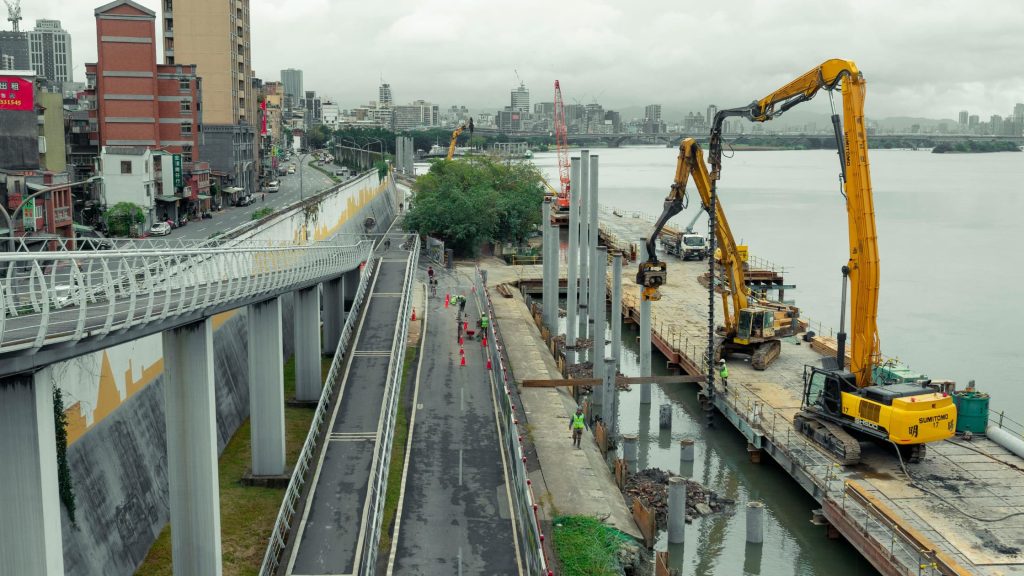
Choosing between a floating dock and a fixed dock comes down to your water conditions, how you use the dock, and your budget. Both work well in the right environment, and both fail quickly in the wrong one.
This guide breaks down the key differences so you can make the right call for your South Florida property.
Floating Dock vs. Fixed Dock: The Core Difference
A floating dock sits on the water surface and rises and falls with the tide, while a fixed dock is anchored to pilings driven into the waterway bed and stays at a set height regardless of water level.
B&Z Construction installs both types across South Florida and can assess which option suits your specific site conditions, water depth, and intended use.
| Feature | Floating Dock | Fixed Dock |
| Water level adjustment | Moves with tide and water level | Stays at fixed height |
| Best water depth | 4 feet or more | Shallow or variable depth |
| Stability | Moderate, moves with waves | High, rigid structure |
| Installation cost | Generally lower | Generally higher |
| Maintenance | Hull and flotation checks | Piling inspection and treatment |
| Permit complexity | Typically simpler | More extensive in Florida |
| Ideal for | Calm, deeper waters | Tidal, shallow, or high-traffic areas |
When a Floating Dock Makes Sense in Florida
Floating docks work best in calm, protected waters with consistent depth. They are a practical choice for residential canals, lakes, and marinas where wave action is minimal and water levels stay relatively predictable.
Water Depth and Tidal Range
Floating docks need a minimum of 4 feet of depth at low tide to remain functional without bottoming out. Most residential canals and lakes in South Florida meet this threshold comfortably.
Lower Installation Cost
Without the need for deep pile driving, floating dock installation is faster and less expensive than a fixed structure of equivalent size. The tradeoff is that flotation systems require periodic inspection and replacement over time.
Flexibility to Reconfigure
Modular floating systems can be expanded, reduced, or repositioned without major reconstruction work. This adaptability makes them a practical choice for property owners whose waterfront needs may change.
Consistent Boat Access
The dock surface moves with the water, keeping the gap between dock and vessel consistent regardless of tide or water level changes. Boarding and unloading stay convenient without the height variation that tidal fixed docks create.
When a Fixed Dock Makes Sense in Florida
Fixed docks are better suited to tidal waterways, shallow areas, and high-traffic locations where stability and load capacity matter more than adaptability. They are the standard choice for commercial waterfronts, boat ramps, and properties with significant wave exposure.
Tidal and Shallow Water
In areas where depth fluctuates significantly, a fixed dock set at the right height outperforms a floating system that may ground out at low tide. Coastal and tidal properties in Broward and Miami-Dade counties commonly fall into this category.
Higher Load Capacity
Piling-supported fixed docks carry significantly more weight than floating systems, making them the right choice for heavier vessels and commercial use. The piling foundation transfers loads directly into the waterway bed rather than relying on buoyancy.
Stability in Wave and Wake Conditions
A fixed dock does not move, which protects vessel hulls and dock hardware from the wear caused by wave and wake action. Wake exposure is one of the most important site factors to evaluate before choosing between the two dock types.
Longer Lifespan
A well-built fixed dock with composite decking and treated or fibreglass pilings can last 25 to 40 years with regular upkeep. Piling condition is the most critical factor in longevity, and commercial diving services are used for underwater inspections to catch deterioration early.
Florida-Specific Factors That Affect Your Choice
South Florida’s marine environment introduces conditions that do not apply in other parts of the country. Both dock types need to account for these realities before installation begins.
Hurricane and Storm Loads
Florida building codes require all marine structures to meet wind and storm load standards. Fixed docks need engineering for high-velocity wind loads, and floating docks need storm-rated anchor systems.
Miami-Dade and Broward County enforce some of the strictest structural standards in the state. See our guide to Florida marine construction permits for what the approval process involves.
Marine Borer and Corrosion
South Florida’s warm saltwater accelerates corrosion and supports marine borer activity that destroys untreated timber pilings. Both dock types require marine-grade materials throughout, including pressure-treated or composite pilings and corrosion-resistant hardware.
Permitting
The Florida Department of Environmental Protection and, where navigable waters are involved, the U.S. Army Corps of Engineers review all dock construction applications. Floating docks that shade seagrass beds face the same scrutiny as fixed structures. Permit requirements apply to both dock types without exception.
Floating vs. Fixed Dock: Cost Comparison for Florida
| Cost Factor | Floating Dock | Fixed Dock |
| Installation (per linear ft) | $150 to $350 | $300 to $600 |
| Piling requirement | Anchor pilings only | Full structural pilings |
| Permit fees | Moderate | Moderate to high |
| Maintenance (annual estimate) | $500 to $1,500 | $800 to $2,500 |
| Typical lifespan | 15 to 25 years | 25 to 40 years |
| Hurricane anchoring cost | $1,000 to $3,000 | Included in structure |
Cost ranges are general estimates for South Florida installations. Final pricing depends on site conditions, size, materials, and permit requirements.
Conclusion
Floating docks suit calm, deeper waters where flexibility and lower upfront cost matter. Fixed docks are the better choice for tidal environments, wave exposure, and applications where stability and load capacity are the priority.
The right answer depends on your specific site, water conditions, and how you plan to use the structure. Get an on-site assessment before committing to either option.