

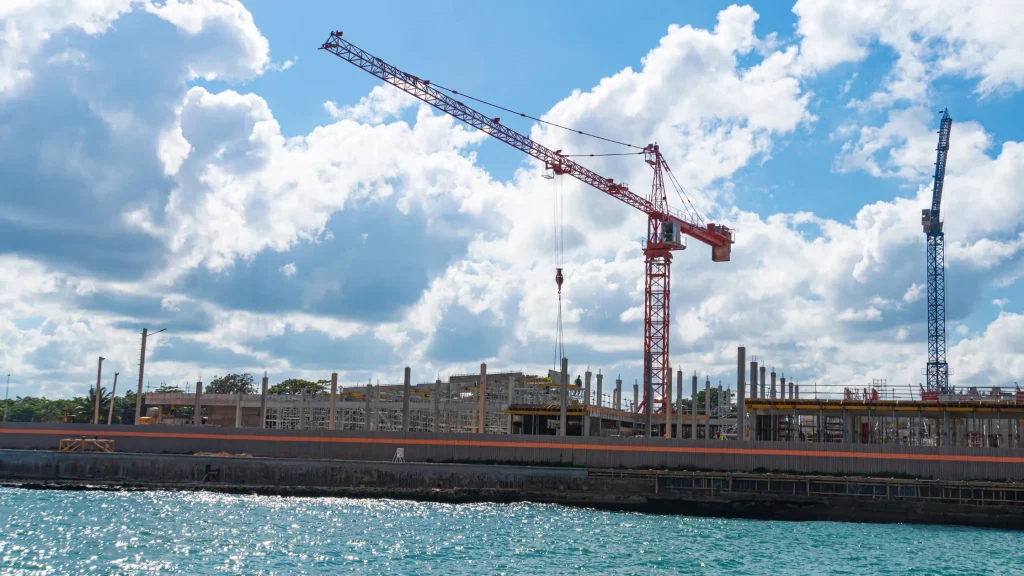
If you are planning any construction near Florida’s waterways, understanding the permit process is not optional. The state has some of the most detailed marine construction regulations in the country, designed to protect its coastlines, wetlands, and water quality.
Getting the permits right before breaking ground saves you from costly delays, fines, and forced removal of completed work.
Why Marine Construction Permits Matter in Florida
Florida’s waterways are regulated by multiple state and federal agencies, which means most marine construction projects require more than one permit before work can legally begin.
Without the right approvals in place, homeowners risk stop-work orders, significant fines, and in some cases being required to restore the site to its original condition at their own expense.
If you are planning a project, B&Z Construction works with homeowners across South Florida to navigate the permitting process from start to finish.
Florida Marine Construction Permit Overview
| Permit Type | Issuing Authority | Typical Timeline | Most Common Projects |
| Environmental Resource Permit | FDEP or Water Management District | 60 to 120 days | Docks, seawalls, dredging, shoreline work |
| Section 404 Permit (Nationwide) | U.S. Army Corps of Engineers | 30 to 60 days | Minor fill, small residential docks |
| Section 404 Permit (Individual) | U.S. Army Corps of Engineers | 6 to 18 months | Large structures, sensitive areas |
| CCCL Permit | FDEP | 60 to 90 days | Beachfront construction |
| Submerged Land Lease | FDEP Submerged Lands Program | 60 to 120 days | Docks extending over state waters |
| Local Building Permit | County or Municipality | 2 to 8 weeks | All marine construction projects |
Types of Permits Required for Marine Construction in Florida
Most marine construction projects in Florida require approvals from at least two agencies, and larger or more complex projects can involve three or more. The Florida Department of Environmental Protection and the U.S. Army Corps of Engineers are the two primary permitting authorities, though local county and municipal approvals are also commonly required.
Environmental Resource Permit (ERP)
Issued by the Florida Department of Environmental Protection or a Water Management District, the ERP covers construction that impacts wetlands, water bodies, and floodplains. Any project that alters water flow or affects aquatic habitat will require one before work begins.
U.S. Army Corps of Engineers Section 404 Permit
This permit covers the discharge of dredged or fill material into navigable waters under Section 404 of the Clean Water Act. Smaller residential projects may qualify for a faster Nationwide Permit, while larger or more sensitive projects require a full Individual Permit review.
Coastal Construction Control Line Permit
Florida’s CCCL marks the boundary beyond which construction is heavily regulated to protect beach and dune systems. Any work seaward of this line requires a specific CCCL permit, and homeowners with beachfront property should confirm their project’s position relative to this line before planning begins.
Local County and Municipal Permits
Palm Beach, Broward, and Miami-Dade counties each have their own marine construction codes covering setbacks, structural standards, and environmental impact. Local permits typically run concurrently with state and federal approvals, so submitting applications in parallel avoids unnecessary delays.
Submerged Land Lease or Easement
Docks, piers, and structures that extend over state-owned water bottoms require a lease or easement from Florida’s Submerged Lands and Environmental Resources program. Overlooking this requirement is a common mistake that can stop a project after construction has already begun.
U.S. Coast Guard Permit
This permit applies to projects that could affect navigation on federally designated waterways, such as structures that narrow or obstruct a navigable channel. Most private residential docks do not trigger this requirement unless the waterway carries a federal navigation designation.
The Florida Marine Construction Permit Application Process
The permitting process for marine construction is sequential in some steps and parallel in others, and understanding the order of operations prevents wasted time and money.
Working with an experienced marine contractor familiar with South Florida’s regulatory environment makes a significant difference in how smoothly the process moves.
For homeowners considering projects like canal and lake dredging, the permit process is often the longest part of the entire project timeline.
Step 1: Site Assessment and Survey
A site assessment establishes the existing conditions of the waterway, soil, and surrounding habitat before any application is submitted. An accurate survey confirms project boundaries and whether the site falls within any protected or regulated zones.
Step 2: Environmental and Biological Assessment
This assessment identifies whether protected species, seagrass, mangroves, or sensitive habitats are present within the project footprint. Knowing this early helps you understand what is realistically permissible before committing to full design and engineering costs.
Step 3: Engineering and Design Plans
Permit applications require detailed drawings showing the proposed structure, dimensions, materials, and its relationship to the surrounding water environment. Incomplete or non-compliant plans are one of the most common reasons applications are returned without review.
Step 4: Submitting the Applications
Applications go to each relevant agency, with timing depending on the project type and location. Where possible, submitting local and state applications in parallel compresses the overall timeline rather than waiting for one approval before starting the next.
Step 5: Agency Review and Public Notice
Most permit types include a public notice period, typically 30 days, during which neighboring property owners and the public can submit comments. Formal objections do not automatically block a project but can trigger additional review that extends the timeline.
Step 6: Permit Issuance and Conditions
Approved permits come with conditions covering construction timing, water quality controls, and inspection milestones that must be followed throughout the project. Violating a permit condition during construction can result in a stop-work order even after all approvals were properly obtained.
Common Reasons Marine Construction Permits Get Delayed or Denied
Most permit delays and denials are avoidable with proper preparation. Understanding what triggers additional scrutiny helps you submit a stronger application and avoid the back-and-forth that adds months to the process.
Incomplete Applications
Missing forms, unsigned documents, or absent supporting materials are the most common reason applications are returned without being reviewed. Double-checking every requirement before submission prevents the most avoidable delays in the entire process.
Inaccurate Site Surveys
Errors in boundary lines, elevations, or existing structure locations create inconsistencies that agencies flag immediately. An accurate, professionally prepared survey is one of the most important documents in any permit application.
Impact on Protected Resources
Work that directly affects seagrass, mangroves, or listed species habitat will face additional conditions or require design changes before approval. Identifying protected resources on or near the site early allows you to adjust the project scope before the application stage.
Insufficient Environmental Mitigation
Projects with unavoidable environmental impacts need a mitigation plan included with the application. Submitting without one almost always results in a return for revision, which adds weeks or months to the review timeline.
Local Code Conflicts
A project approved at the state level can still be blocked by a local setback requirement or zoning rule that was not checked early. Reviewing local codes in parallel with state requirements prevents late-stage surprises that are difficult and costly to resolve.
Neighbor Objections During Public Notice
Formal objections from adjacent property owners during the public notice period can trigger extended review, even if they are not grounds for outright denial. Addressing potential neighbor concerns before submission can reduce the likelihood of objections that slow the process.
Unconfirmed Submerged Land Ownership
Assuming construction rights over submerged land without confirming ownership status is a common and costly mistake. Verifying submerged land ownership before any design or application work begins is a straightforward step that prevents serious complications later.
Conclusion
Florida marine construction permits involve multiple agencies, overlapping timelines, and site-specific requirements that vary by project type and location. Getting the process right from the start, with accurate surveys, complete applications, and a clear understanding of which permits apply, is what separates a project that moves forward from one that stalls.
Frequently Asked Questions
Do I need a permit to replace an existing dock in Florida?
Yes. Even a like-for-like dock replacement typically requires permits from the Florida Department of Environmental Protection and your local county. If the replacement changes the size, material, or configuration, additional review may apply.
How long does it take to get a marine construction permit in Florida?
It depends on the permit type and project complexity. A Nationwide Permit from the Army Corps can take 30 to 60 days. A state Environmental Resource Permit typically runs 60 to 120 days. Projects requiring an Individual Permit from the Army Corps can take six to eighteen months.
Can I start construction while waiting for my permits to be approved?
No. Beginning work before all required permits are issued is a violation of Florida law and can result in stop-work orders, significant fines, and a requirement to restore the site at your own cost. All approvals must be in hand before any ground-disturbing or water-disturbing work begins.
What happens if I build without a marine construction permit in Florida?
Unpermitted marine construction can result in fines, mandatory removal of the structure, and restoration costs that far exceed what the original permit process would have cost. State and federal agencies actively monitor Florida’s waterways, and unpermitted structures are frequently identified during routine inspections.
Do I need a submerged land lease for a private dock?
In most cases, yes. Florida’s submerged lands are state-owned, and any structure built over them, including private residential docks, typically requires a lease or easement from the Florida Department of Environmental Protection. Your contractor or a permitting consultant can confirm whether this applies to your specific site.
Who is responsible for obtaining permits, the homeowner or the contractor?
In most cases, the contractor pulls the permits on behalf of the homeowner, but the homeowner remains legally responsible for ensuring all required approvals are in place. Always confirm with your contractor exactly which permits are being obtained and request copies of all approved permits before work begins.
What is the difference between a Nationwide Permit and an Individual Permit from the Army Corps?
A Nationwide Permit is a pre-approved general permit for project types that meet specific criteria and are considered to have minimal environmental impact. It is faster and less involved than an Individual Permit, which requires a full project-specific review and is used for larger or more sensitive projects.